

Introduction
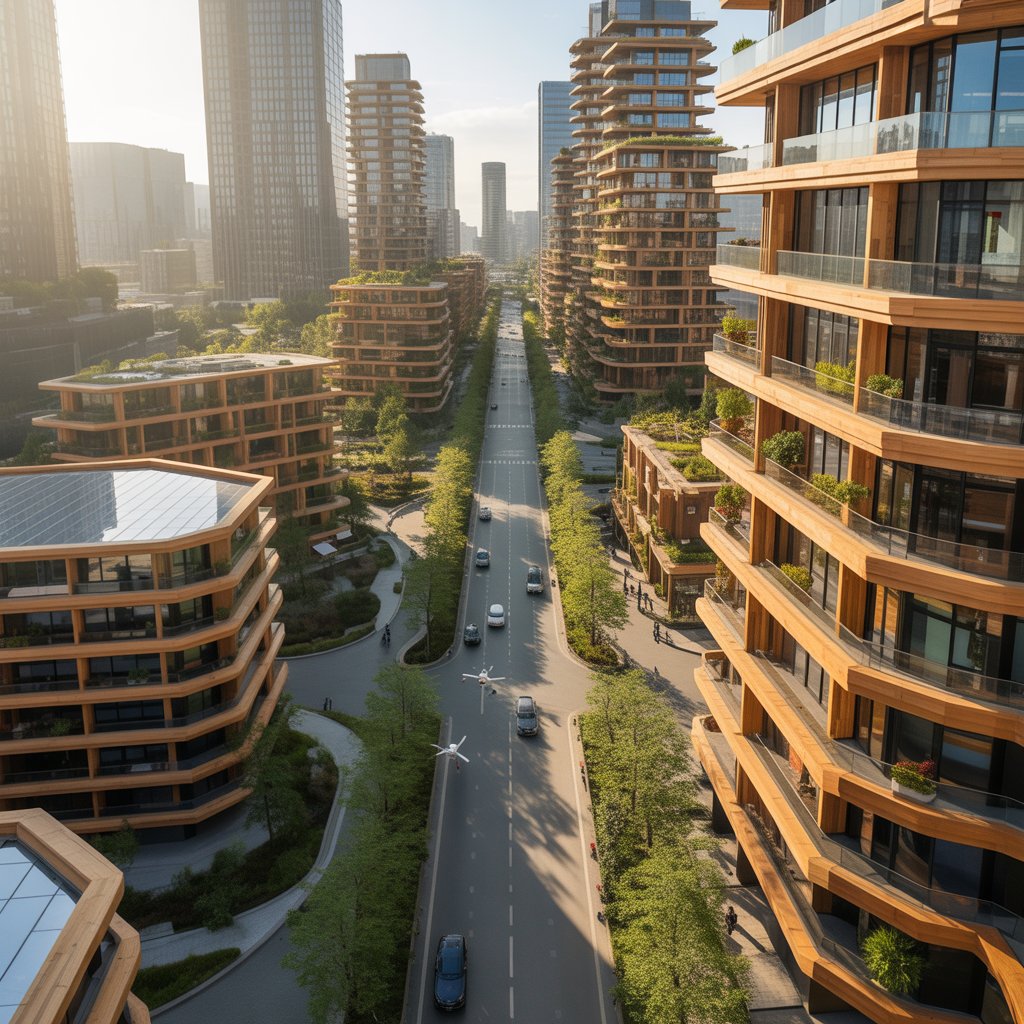
Timber smart cities are redefining what luxury living means in the 21st century. While traditional urban growth relies heavily on concrete and steel, forward-thinking developments now combine engineered timber with intelligent infrastructure. As a result, homeowners enjoy elegant architecture, lower environmental impact and integrated technology — all within premium urban communities.
Luxury is no longer about excess. Instead, it is about performance, sustainability and intelligent design. Consequently, timber smart cities represent the next evolution of high-end living.
What Are Timber Smart Cities?
Timber smart cities integrate engineered timber construction with advanced urban planning and digital infrastructure. In other words, they combine:
-
Mass timber buildings
-
Renewable energy systems
-
Smart water management
-
Integrated transport networks
-
Energy-efficient design
Because timber structures are lighter and faster to assemble, developers can build entire communities more efficiently. Meanwhile, digital systems optimise energy use, security and comfort in real time.
Why Timber Elevates Luxury
Historically, concrete symbolised wealth and permanence. However, modern luxury has shifted toward natural materials and refined simplicity. Timber delivers warmth, texture and biophilic appeal that artificial materials cannot replicate.
Moreover, engineered timber supports wide spans, high ceilings and expansive glazing. Therefore, architects can create open-plan interiors flooded with natural light while maintaining structural integrity.
Unlike traditional construction, timber buildings also feel quieter and more comfortable due to superior thermal and acoustic performance.
Smart Infrastructure Meets Sustainable Design
True luxury in a smart city means seamless living. For example:
-
Automated lighting and climate control
-
Solar integration and battery storage
-
Smart waste systems
-
Efficient public transport
-
Walkable green spaces
When paired with timber construction, these technologies reduce carbon emissions significantly. Consequently, residents benefit from lower running costs and improved environmental performance.
Speed, Efficiency and Urban Growth
Urban expansion demands rapid construction without sacrificing quality. Timber smart cities offer a solution because prefabricated timber systems shorten build timelines dramatically.
In addition, lighter structures reduce foundation requirements, which lowers cost and environmental impact. As a result, entire neighbourhoods can rise faster while maintaining architectural sophistication.
For further industry insights, visit:
www.timberhome.co.za
www.timberhomeconstruction.co.za
www.timberhomeswesterncape.co.za
Health, Wellbeing and Biophilic Living
Research consistently shows that natural materials improve mental wellbeing. Timber interiors reduce stress levels and create calming environments. Therefore, living in timber smart cities enhances not only comfort but also health.
Furthermore, smart urban planning prioritises green corridors, natural light and clean air. Consequently, residents experience a lifestyle that blends nature with advanced technology.
South Africa’s Opportunity
South Africa faces rapid urbanisation and rising housing costs. However, timber smart cities offer a scalable solution that combines affordability with prestige. Because engineered timber reduces build time and carbon output, it aligns perfectly with future sustainability regulations.
Developers who adopt timber smart cities early will lead the next wave of premium real estate.
The Future of Luxury Living
Luxury now means intelligent design, environmental responsibility and timeless aesthetics. Timber smart cities deliver all three.
As global cities evolve, the most desirable communities will combine natural materials with digital precision. Therefore, the future of luxury living will not be concrete towers — it will be warm, sustainable and smart environments built from timber.