

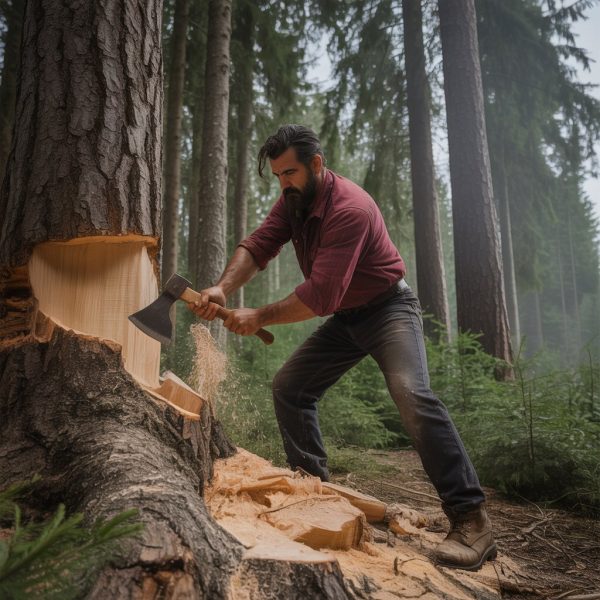
Many people assume that building a timber home should be straightforward. If trees grow on a farm, the logic seems simple. Cut the trees, mill the timber and start building. However construction timber must meet strict structural standards before it becomes safe for use in buildings. As a result farm timber rarely qualifies as structural material. Understanding the difference explains why the timber industry follows a controlled supply chain.
Structural Timber Requires Grading
Structural pine timber must meet strength classifications before builders use it in construction. Grading determines how much load each piece of timber can carry. Engineers rely on these strength classes when they design walls, floors and roofs.
Grading evaluates several characteristics including
• Knot size and position
• Grain alignment
• Density and stiffness
• Structural defects
Professional graders or specialised machines perform this evaluation. Timber that fails to meet the required strength class moves to non structural uses. Consequently timber cut directly on a farm cannot guarantee predictable structural performance.
SATAS South African Technical Auditing Services
Moisture Control Matters
Freshly cut timber contains significant moisture. In many cases the moisture level exceeds forty percent. Structural pine timber normally requires moisture content closer to twelve to sixteen percent.
Industrial kilns reduce moisture levels carefully. Controlled drying stabilises the timber and protects it from problems such as
• Warping
• Twisting
• Cracking
• Dimensional movement
If builders install timber before proper drying takes place, the wood continues to shrink. That movement can damage finishes, distort frames and create structural misalignment. Therefore kiln drying plays a critical role in structural timber production.
Treatment Protects the Timber
Pressure treatment protects pine timber from insects and decay. Treatment plants place timber inside pressure vessels where preservatives penetrate deep into the fibres. This process creates long term protection against termites, borers and fungal attack.
Without this protection timber structures remain vulnerable to biological damage. For that reason structural pine timber used in housing normally undergoes pressure treatment before it reaches construction sites.
South African Wood Preservers Association
Precision Milling Creates Reliable Building Components
Construction systems depend on accurate dimensions. Modern sawmills cut timber to precise sizes so builders can assemble structural frames quickly and safely.
Farm milling often produces irregular boards and uneven surfaces. Even small dimensional differences can affect wall alignment, roof stability and connection strength. Precise milling therefore ensures that framing members fit together correctly and transfer loads safely through the structure.
Engineering Requires Certified Structural Properties
Structural design depends on verified timber properties. Engineers calculate loads, spans and connection strengths using certified strength classes. Certified structural pine timber provides those values through recognised grading systems.
If timber lacks verified structural properties, engineers cannot confirm the safety of the building design. As a result uncertified farm timber cannot serve as structural framing material.
Why the Timber Supply Chain Exists
The structural timber industry includes several specialised stages. Each stage prepares the timber for safe use in buildings.
• Plantation forestry produces pine sawlogs
• Professional harvesting ensures log quality
• Sawmills cut logs into structural sections
• Kilns reduce moisture content
• Grading assigns strength classifications
• Treatment protects the timber from insects and decay
Together these processes transform raw trees into structural building material. Although cutting timber on a farm may appear economical, skipping these steps introduces serious structural risks.
For additional insight into the timber industry visit
www.timberhome.co.za
www.timberhomeconstruction.co.za
www.timberhomeswesterncape.co.za
Trees growing on a farm may look like ready building material. However safe timber construction requires more than cutting logs into boards. Structural pine timber must be graded, dried, treated and milled with precision before builders can use it safely.
These steps create reliable structural material that performs consistently over decades. When the process works correctly, timber homes deliver strength, durability and long term stability.