

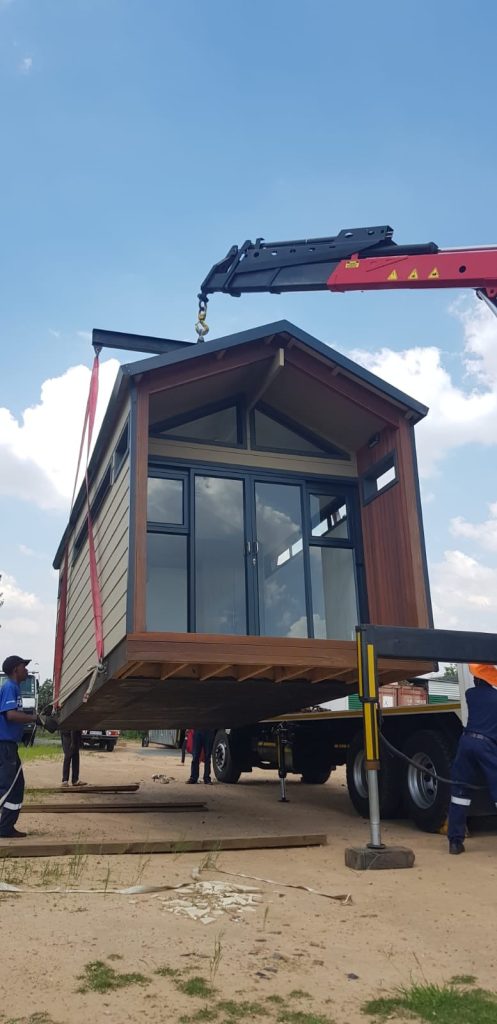
From Manual Craft to Industrial Precision
Modern timber home manufacturing has completely transformed housing production. What once relied on slow, weather-dependent site work has evolved into fast, repeatable factory workflows driven by precision technology. Today, with the help of CNC cutting, automated jigging, and pre-assembly lines, large-scale timber factories can produce entire homes with astonishing speed and accuracy.
Furthermore, this shift means that housing no longer depends solely on favourable weather or unpredictable labour conditions. Instead, manufacturing now happens in clean, controlled environments where every component is crafted with millimetre-level precision.
Inside a Modern Timber Factory
A timber factory typically fabricates wall panels, floor and roof systems, gables, and other structural modules — all in a controlled indoor environment. By moving the process off site, these facilities eliminate many of the risks that come with traditional building.
For example, there are no delays from rain, minimal variation in workmanship, and dramatically less material waste. Each component is pre-checked, assembled, and delivered to site ready for installation. Once on location, the modules fit together seamlessly, much like giant building blocks, enabling rapid assembly and consistent quality.
What Determines Factory Output
Of course, the output capacity of a timber factory depends on several key factors — including layout design, number of production lines, degree of automation, workforce skill, material flow, and logistics efficiency.
In highly optimized facilities, entire houses or large modules can roll off the production line every few hours. As a result, these operations can achieve monthly outputs that rival or even exceed what traditional construction can accomplish in a year. The higher the level of automation, the more predictable and scalable the workflow becomes.
Real-World Example: Space Factory (South Korea)
A powerful example of this industrial shift is Space Factory, located in South Korea. Originally, the company produced roughly 150 to 200 timber-frame homes per year. However, as demand increased, they recognized the need for higher precision, faster delivery, and improved quality control.
To achieve this, Space Factory invested in advanced automation, including production lines powered by WEINMANN machinery — a global leader in timber construction technology. They also adopted modular construction techniques that allowed for tighter tolerances and repeatable assembly.
Scaling Up Through Automation
With these upgrades, Space Factory’s target output rose dramatically — aiming for around 1,000 homes annually. If we assume an even distribution, this equals approximately 80 to 100 homes per month, though in practice, production peaks and slows depending on scheduling and supply.
Their factory now uses multiple processing tables and module bridges to maintain faster cycle times — reportedly approaching a 20-minute cycle per module. This level of efficiency demonstrates how automation and smart workflow design can elevate a mid-sized operation into an industrial powerhouse.
Why This Matters for the Future of Housing
Ultimately, the example of Space Factory proves a simple truth: industrialized timber construction changes everything. By combining modern automation with renewable materials, factories can deliver high-quality homes faster, cheaper, and with far less environmental impact.
As housing demand grows globally, these systems ensure consistency, save time, reduce waste, and maintain quality — all while keeping costs predictable. Compared to traditional methods, industrial timber manufacturing doesn’t just build homes; it builds a more sustainable future.